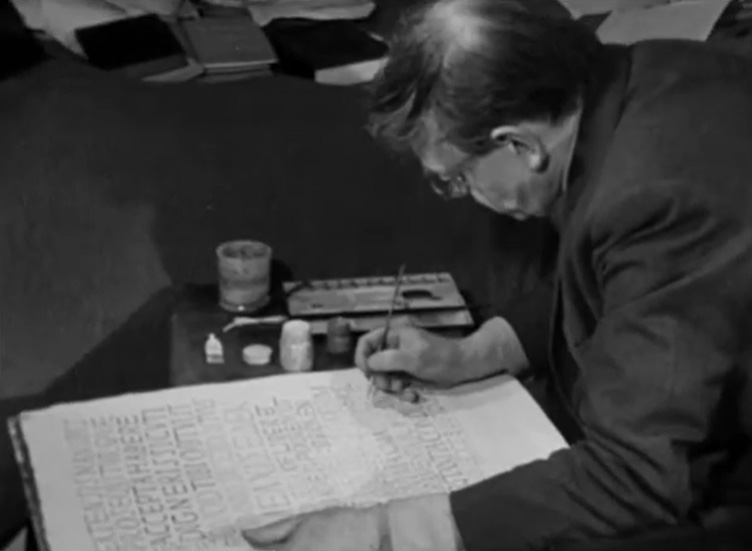
The painter and poet David Jones was born in 1895 to a Welsh father and English mother. While he only lived and worked in Wales for short periods across his life, he was obsessed with Wales – with its history, culture, literature and language. His connection to Wales shaped so much of his work: from his watercolours, to his poetry, to his essays, and to his wonderful painted inscriptions which are at the heart of this exhibition.
To find out more about Jones's family, his early life, his service during the First World War, and his conversion to Catholicism, take a look at this 1973 film of an exhibition of his paintings held at the National Library of Wales.
For a deeper dive into Jones’s time living and painting in Wales at Capel-y-Ffin and elsewhere, you can watch these clips – one in Welsh and one in English – which explore a range of artworks Jones made and the influence of the Welsh landscape on his imagination.
Jones's artworks and poetry were also deeply influenced by his experience serving as a private in the Royal Welsh fusiliers during the First World War. According to his biographer, Thomas Dilworth, Jones spent more time at the front than any other First World War poet, and you can read more about his war experience here. So much of Jones’s poetry, from his famous epic-length prose poem In Parenthesis (1937) to his later fragments, some published in The Sleeping Lord (1974) but much left unpublished at his death, concern the impact of war on the ordinary soldier and the destructive consequences of empire.
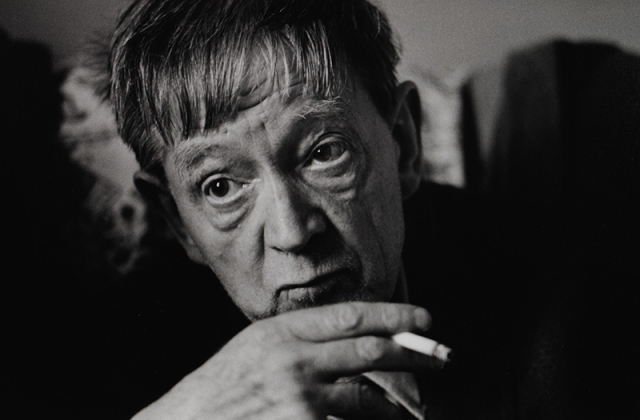

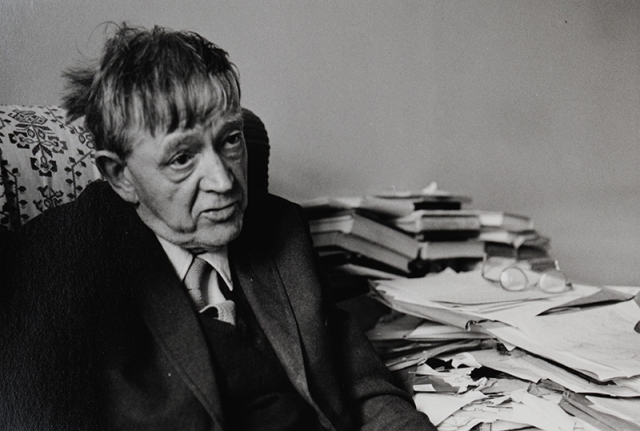
His later fragments of poetry, set within the Roman empire, use the language of the First World War and Jones’s lived experience as a ‘British Tommy’, to consider the camaraderie of soldiers and the close friendships between men of different backgrounds, which stands in contrast to the destructive forces of conflict and military expansion. Written during and after the Second World War, they also respond to an atmosphere of polarised politics, with references to fascism and communism, and to the destruction Jones experienced living in London during the Blitz. To get a sense of his poetry, and hear Jones himself reading it, you can listen to the beginning of the fragment ‘The Dream of Private Clitus’ (1964) here.
Throughout all of Jones’s poetry, Wales, and its landscape, myths, language, and literature, features in important ways. For Jones, Wales represented a country with a complex and longstanding heritage which was under threat from a larger empire, in this case the British empire. To explore the effects of imperialism on local, individual, communities across time, Jones imaginatively united the British and Roman empires, and the Welsh and other ancient cultures and people conquered or threatened by larger powers. As an example, Jones’s The Tutelar of the Place (1961) is set in the Roman world but draws on Welsh language and culture to consider resistance and dissent from imperial control, and you can listen to the first part of the fragment here.
Poetry was not, of course, the only place in which Jones explored his deep connection to Wales. Like many soldiers, Jones carried the scars of warfare later in life; he suffered from what we might now call PTSD (Post-traumatic stress disorder) and, in particular, was agoraphobic for much of his later life. Largely confined to his rooms in London, Jones was an active letter-writer. Much of his correspondence is held at the National Library of Wales and so it is possible to trace his friendships, ideas and character through the great number of letters that he wrote and received with other artists, writers, poets and thinkers. Indeed, many of his painted inscriptions were sent as gifts. While Jones corresponded with people across the world, he treasured his Welsh friendships, and it is often in those letters that we see most clearly his love of Wales. One friend, who championed Jones’s works and especially his painted inscriptions, was Saunders Lewis (1893-1985), the Welsh writer and co-founder of Plaid Cymru. Jones claimed not to be political, yet he was deeply concerned about the survival of the Welsh language, land and culture, writing numerous letters to the press and supporting Welsh politicians and activists.
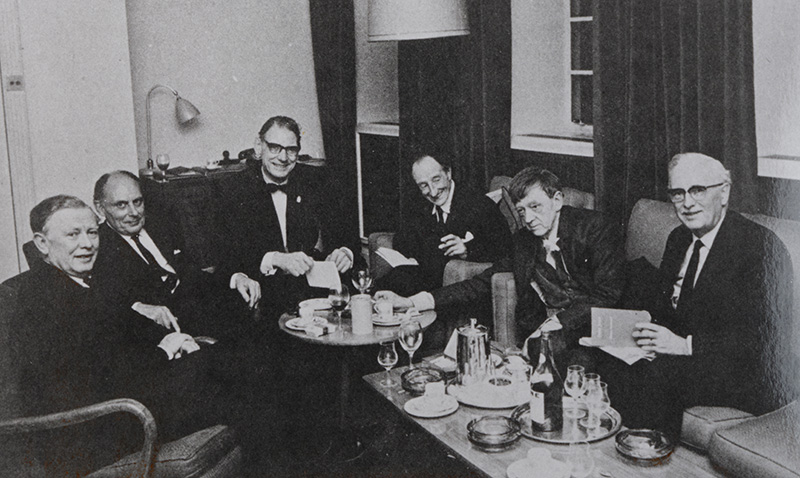
His longstanding friendship with Lewis in particular, and their shared experiences in the First World War and as Catholics and creative artists, can be seen in a 1965 BBC Interview for Writers World. This interview, perhaps more than any other, acts as an insightful introduction to many of the important areas of Jones’s life and works, so feel free watch as little or as much as you like. Ranging widely across a long conversation, the interview covers Jones’s belief that human beings were essentially artists, his conversion to Catholicism, his approach to making inscriptions in Latin and Welsh, his understanding of Roman and Welsh history, his turn from visual art to writing poetry with the creation of In Parenthesis (1937), the effects of his war service and struggles with mental health, and his need to create art from what he had known and experienced.
Jones’s painted inscriptions were an integral part of his life’s work. It was a new form of art which he created himself and the inscriptions stand as unique often enigmatic contributions to his wider desire to preserve elements of the past in the present. To experience a deep scan of one of these inscriptions you can watch the film below.
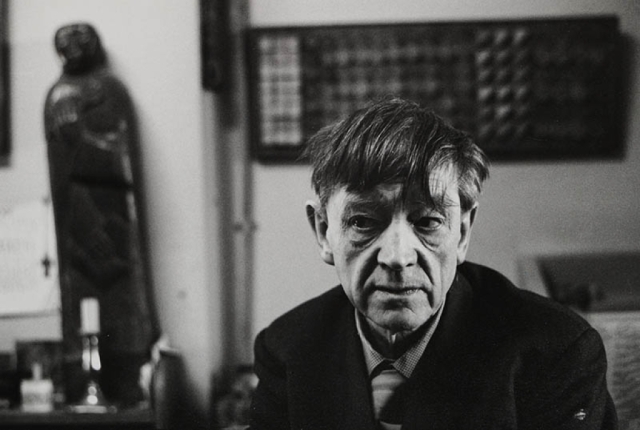
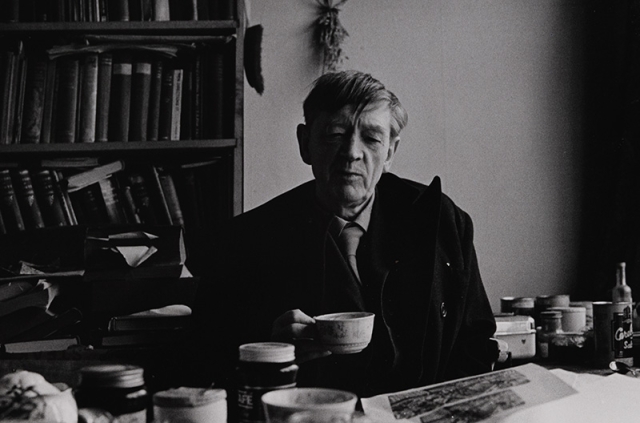
The twelve inscriptions held by the National Library of Wales range from small works made for individuals to larger commissioned pieces and ones which Jones refused to sell because they were too important to him. Indeed, he often lived with them displayed in his rooms, as you can see in the photograph below. Each work is made up of fragments of literature or scripture, words and names which hold deep symbolism, and ancient and modern languages which Jones struggled himself to understand. If you would like to learn more about ‘reading’ Jones’s inscriptions, you can find out more here. Jones saw all his inscriptions as ‘gratuitous offerings’, as artistic gifts often made for friends or to commemorate important historical figures or moments of significance. For this reason, he often reproduced copies of these inscriptions as Christmas cards sent to friends and relatives – in some cases, painting on the photographs and adding copious notes on the reverse to explain their cultural relevance. As precious parts of his collection, Jones would have been pleased to know that twelve original inscriptions are being looked after by the National Library of Wales, to which he bequeathed so many of his papers, letters, books and works after his death in 1974.


To find out more about the archival collection, you can hear from some of the people who preserve and protect these artefacts for public use.
We really hope that you enjoy the exhibition!