
As we approach the end of Disability History Month, I look back to a challenging encounter that made me ponder.
For those of you who have watched the series Cyfrinachau’r Llyfrgell on S4C, you will know that we had a visit from Scott Quinnell, the former rugby player. You may remember Scott admitting that he was very uncomfortable in a library. After all, he's always had dyslexia, and as a result, he's been much more at home on a playing-field than in a classroom or library. So how could we make Scott feel at home at the National Library of Wales? That was the challenge.
Firstly, it was an opportunity to address dyslexia, or, as it first appears among our collection of printed books, 'word-blindness'. Yes, the old assumption was that some deficiency of eyesight hindered the ability to read among some individuals. In a book by the Glasgow eye surgeon James Hinshelwood, we get a first glimpse in English of an attempt to understand the condition. He emphasises that there were no flaws in the minds of those who manifested the condition, and that it appeared to be inherited within some families.
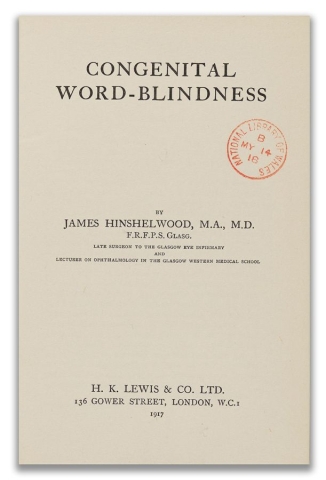
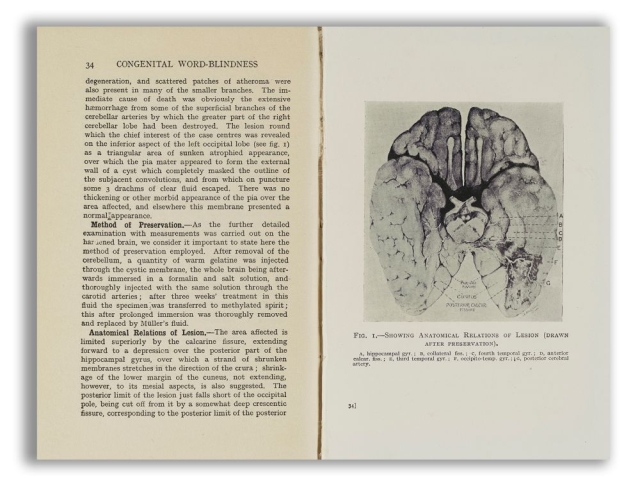
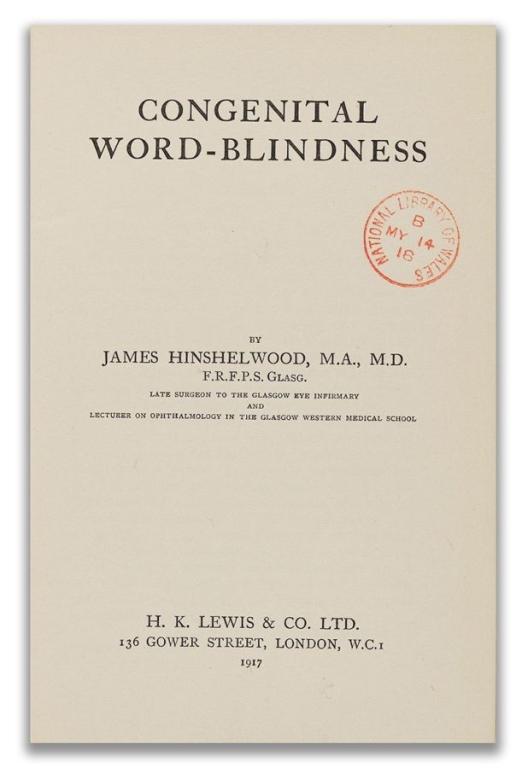
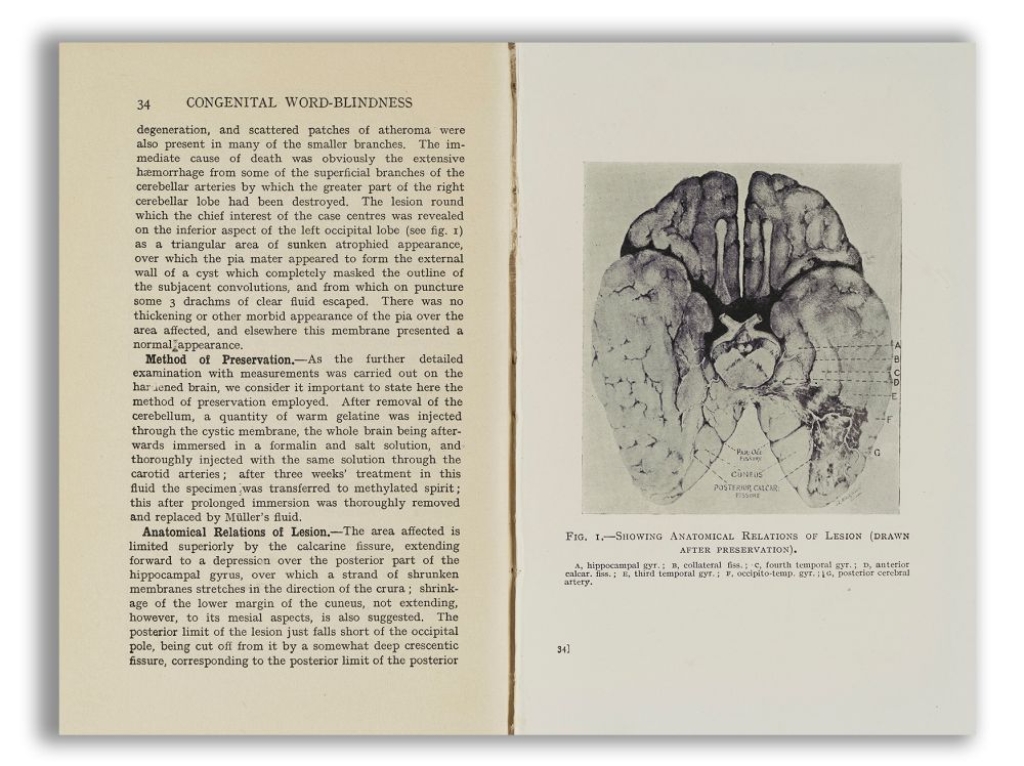
Scott immediately identified himself with some of Hinshelwood's 1917 cases, acknowledging the sadness that his own dyslexia had not been recognized or alleviated by the education regime decades later.
Secondly, it was an opportunity to challenge the label of disability, by introducing Scott to several characters in the Library's collections who overcame barriers within their societies. From John Smith, the blind harpist from Conwy who entertained crowds with his instrumental talent in 1793, to Elfyn Lewis, the contemporary colour-blind artist whose paintings are among the most colourful in the Library, there are many examples in our collections of those facing difficulties and assumptions within society, and of flourishing. It's a wonder to me that 77 huge volumes of the Welsh Bible in braille can be ordered to the Reading Room, but that it would take special reading skills to cope with the content! It is by running the fingers gently over the leaves that one realises how special is the talent of those who have mastered the science of braille. I am the one who is unable to read it.
But of all the disability-related items in our collections, perhaps the most striking one is Pughe's dictionary. No, not William Owen, but rather Elizabeth (Eliza) Pughe, that talented twelve-year-old girl from Clynnog Fawr in Arfon who compiled an illustrated dictionary around 1843 to communicate with the world around her. She is said to have been born deaf and mute, and that the only education she received was within her own household. This hands-on training is reflected in her dictionary, which gives us a glimpse of her world, her life, – and her humour!
Eliza Pugh - the 'funny, elegant and tender girl' as she is described by Eben Fardd - had a short life, but she left a special legacy. We will hear more of her story in 2026, as we commemorate the two-hundredth anniversary of her birth.
A range of disabilities are represented in the collections of the National Library. But there are far more cases of people overcoming social barriers, and of contributing fully to the life of the nation and their communities. And that, after all, is Scott Quinnell's legacy.
Category: Article