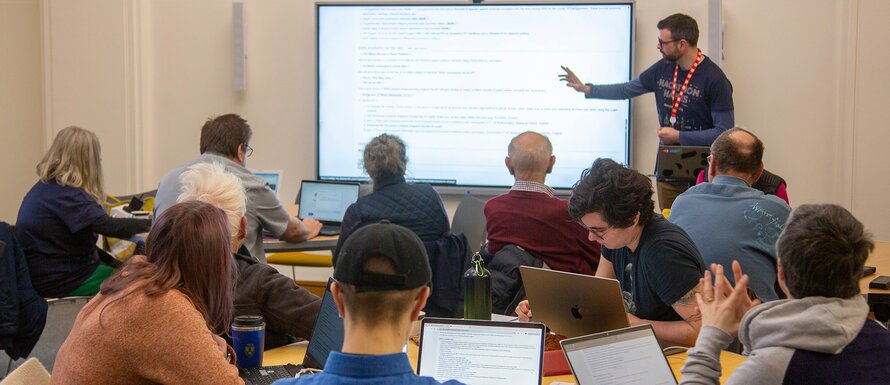
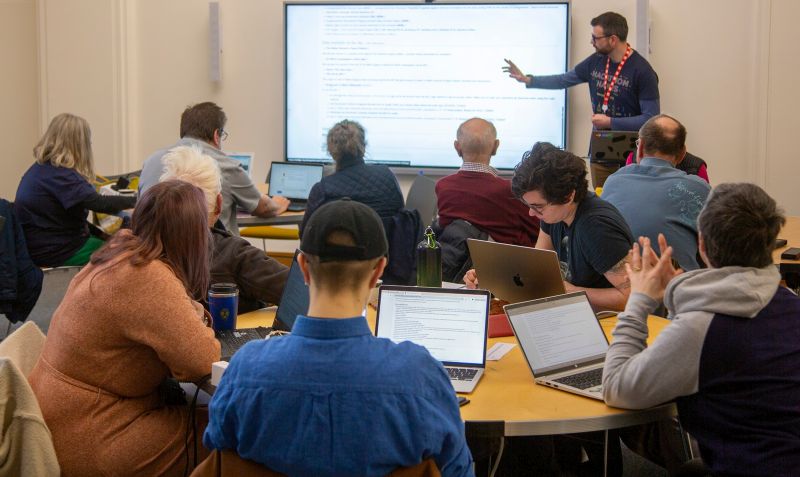
The Library’s annual hack day has now been firmly re‑established following a break during and after Covid. This year’s event built on the success of the 2025 Hackathon, with more participants and more datasets than ever before.
The event was partially funded by a Welsh Government grant-funded project aimed at engaging more people with Welsh‑language data and online content, and at increasing the amount of information available online in Welsh. It also provided the perfect opportunity to invite people with a wide range of skills, interests and backgrounds to explore, hack, develop and create using datasets drawn from across the Library’s collections.
Datasets available on the day included Welsh Newspapers, the Welsh Women’s Peace Petition, Tithe Maps, Crime and Punishment data, biographical and geographical datasets, WWI Book of Remembrance data and much more. For the first time, the event was a sell‑out, drawing interest from students, staff, local historians, technologists, and creative industries professionals, to name just a few.
One of the best aspects of these hack days is that participants are simply given data and a little inspiration, and then encouraged to follow any line of inquiry they choose. In previous years, this freedom has produced unique and unexpected outcomes, such as transforming shipping data into music and creating detailed 19th‑century land‑use maps. This year, AI featured in several of the projects, as you might expect, but there was also plenty of other high‑ and low‑tech innovation throughout the room.
One participant used AI to colourise and animate historical photographs, presenting his findings as a polished, social‑media‑style short video.
Another AI‑focused project explored the use of generative AI to speed up data‑analysis tasks demonstrating that work which previously took well over an hour using traditional coding methods could now be completed in around ten minutes with the help of an AI model. The standout AI use case of the day, however, went to Mike, who developed a face‑tracking tool that followed a viewer’s eye movements and replicated them in images from the Library’s collection, leaning into the old saying that the eyes in portraits seem to follow you around the room.
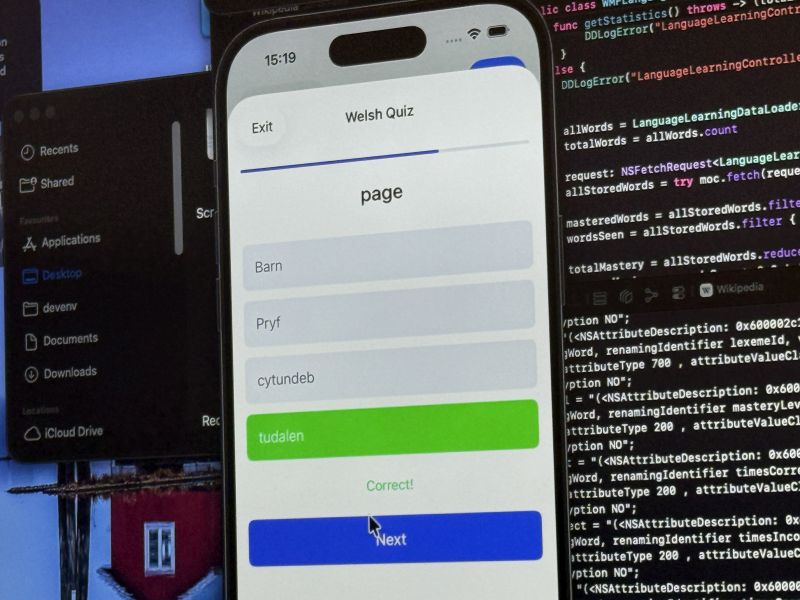
Another participant, a web developer by trade, created a prototype Welsh‑learning app which drew on Wikidata as a source for Welsh words and phrases. The app featured several game modes that challenged users to match English words to the correct Welsh equivalents. The Library has spent many years supporting the use of Welsh in open data sources like Wikidata, so it was fantastic to see such an impactful and creative application of this work.
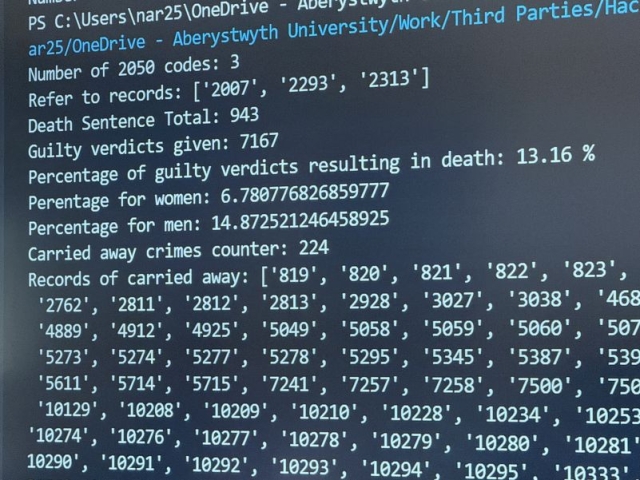
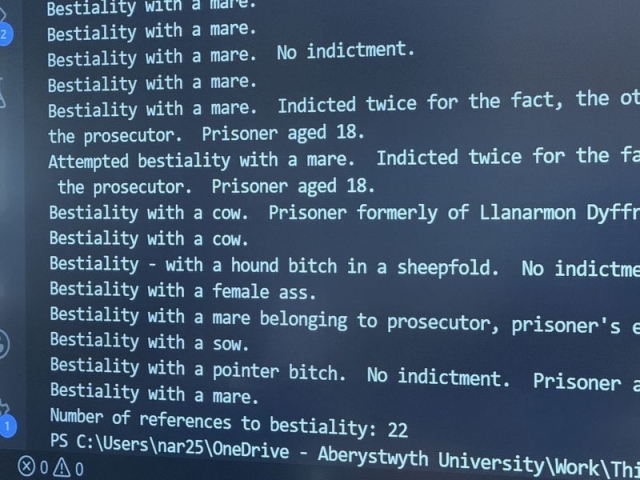
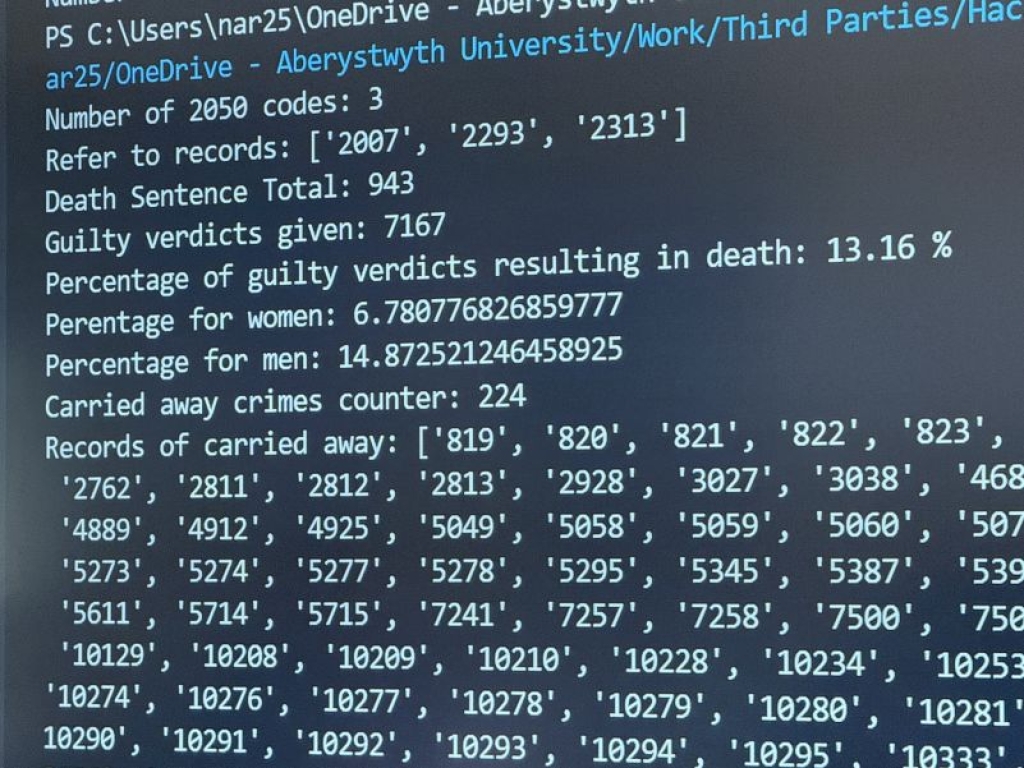
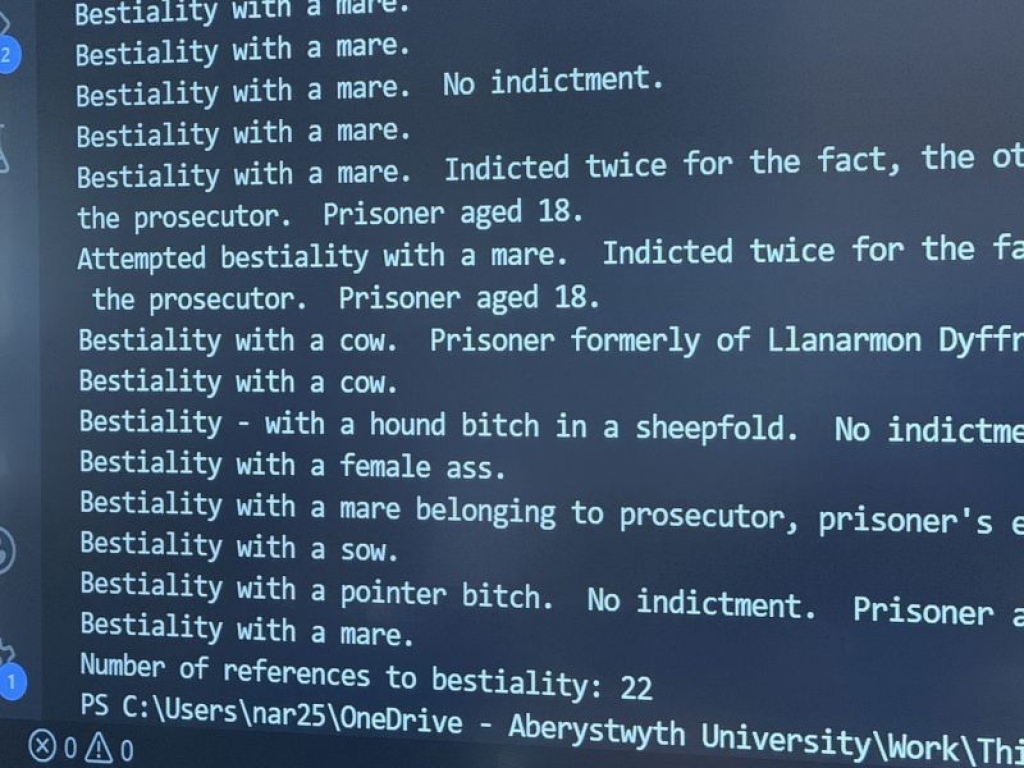
Our 18th‑ and 19th‑century Crime and Punishment dataset was particularly popular this year, with several participants analysing it to uncover patterns and trends. They explored the most, and least, common names of convicted individuals, examined the frequency of key terms, and used Python to calculate new metrics. We learned that 13.6% of guilty verdicts resulted in a death sentence, with the percentage being higher for men. The analysis also highlighted a number of unusual crimes, including a flurry of nutmeg thefts, over 200 cases of people being “carried away,” and 22 cases of bestiality.
Other participants turned their attention to WWI tribunal records, enriched the Women’s Peace Petition with local knowledge, and extracted information from newspapers on topics such as shipping activity and engineering projects.
As always, the output of these events is invaluable in helping us develop our digital services, and the day provided a fantastic opportunity for people to engage with our content in new and unexpected ways. There was enthusiastic discussion throughout, and we are already speaking with several participants about potential collaborations and support for upcoming academic projects.
We hope to continue building on the momentum and enthusiasm for the Hackathon to deliver an even bigger event next year!