I’m currently archiving the Workers Education Association North Wales District Archive. It was established in 1925, and celebrates its centenary this year. Since starting work on this collection, I think a lot of how my life would have been 100 years ago. Growing up in a working class family, there would be many opportunities that would not be open to someone like me. It’s unlikely I would have had an education, and there was a strong chance I would have worked in domestic services, and I definitely would not have been able to vote.
Before the 1832 Reform Act, the only people who had the right to vote was a small number of wealthy men, property owners and ones who paid certain taxes. After to Act, it expanded to include men who rented property for £10 a year or more, landowners and tenant farmers, but women and working class men were excluded. Over the next 52 years, changes in the Act meant more men could vote, but they still needed to meet property requirements, which excluded the majority of working class men, and all women.
A big change came with The Representation of the People Act of 1918-all men the age of 21 and over could vote, no property requirement required. Women for the first time could vote, however they had to be 30 years or over, and they did need meet certain property requirements. It was a big step for the working class, but not working class women like me. I would still not have the right to vote. It would be another decade before I could mark my box when Equal Franchise Act 1928 extended the vote to all women over the age 21 in 1928.
Although the working class would have been silenced when it came to voting, they would have been able to add their voices to causes by signing a petition.
This is a copy of a petition sent to the Earl of Pembroke, it’s a dispute regarding who will pay for the repairs of Cardiff bridge, the inhabitants or Cardiff or the County of Glamorgan. The names likely included those of the working class, who couldn’t vote in 1578, but could sign petitions.

(Penrice & Margham 2770:- 1578)
This next petition was signed by working class quarrymen. It has a little more information on this one, with the age, character and family of this who signed. It is even noted who owned land. Although around 1810 they would have been unable to vote, it is possible that by 1867, those who owned land might have met the property requirement to be able.
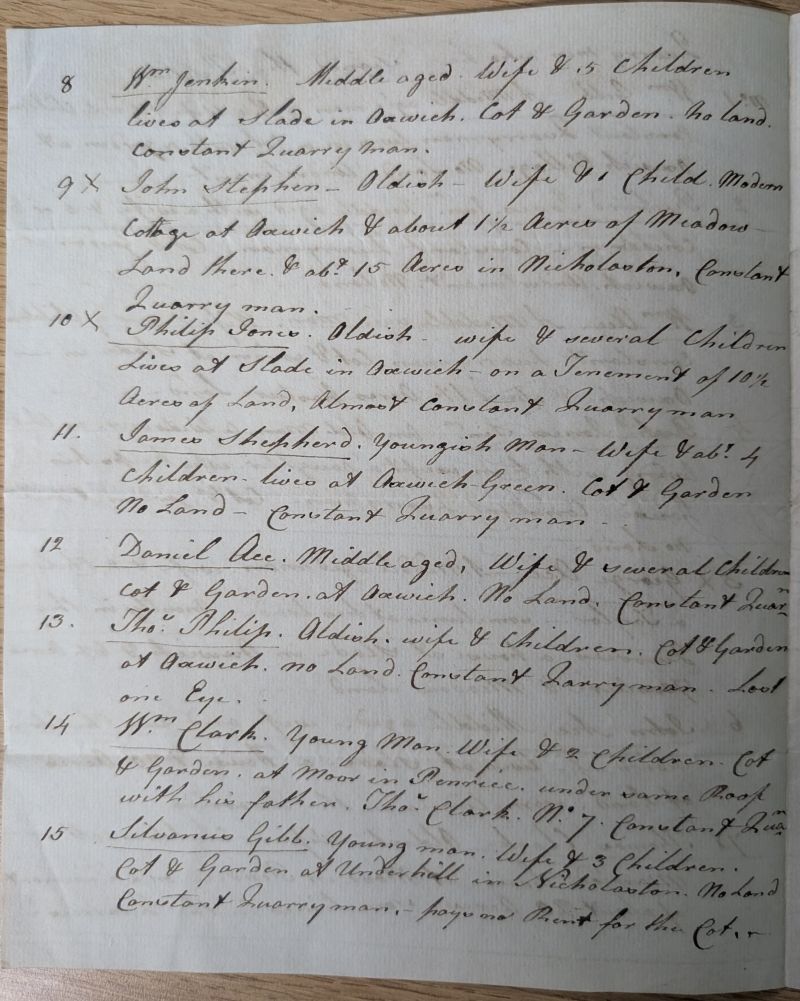
(Penrice & Margham 4131:- 1810x1813)
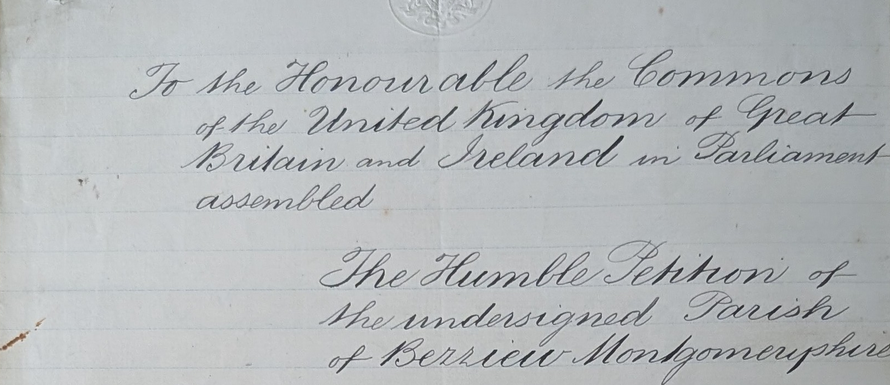
This next petition has women’s names along with the men’s. Although the occasional ‘x’ indicated that some of the inhabitants of the parish of Berriew were unable to sign their name. This petition was addressed to the House of Commons showing their feelings towards the Suspensory Bill, and their wish for the House of Commons to reject it.

(Glansevern 13337:- 1893)
One petition I hope I would have signed is the Women’s Peace Petition. It’s a celebrated petition that now has a dedicated permanent exhibition here at the National Library. It was signed by 390,296 women who wished for no more war. Amongst these signatures is that of my Hen Famgu (Great Grandmother).

I’m pretty sure she wrote her name herself, as her handwriting is very similar to my mam’s. Whether or not I would have been able to write my name on the petition, or had to mark with an ‘x’ is another issue altogether, and a blog post for the future. Either way, I hope that voice would not have been silenced.
Category: Article