
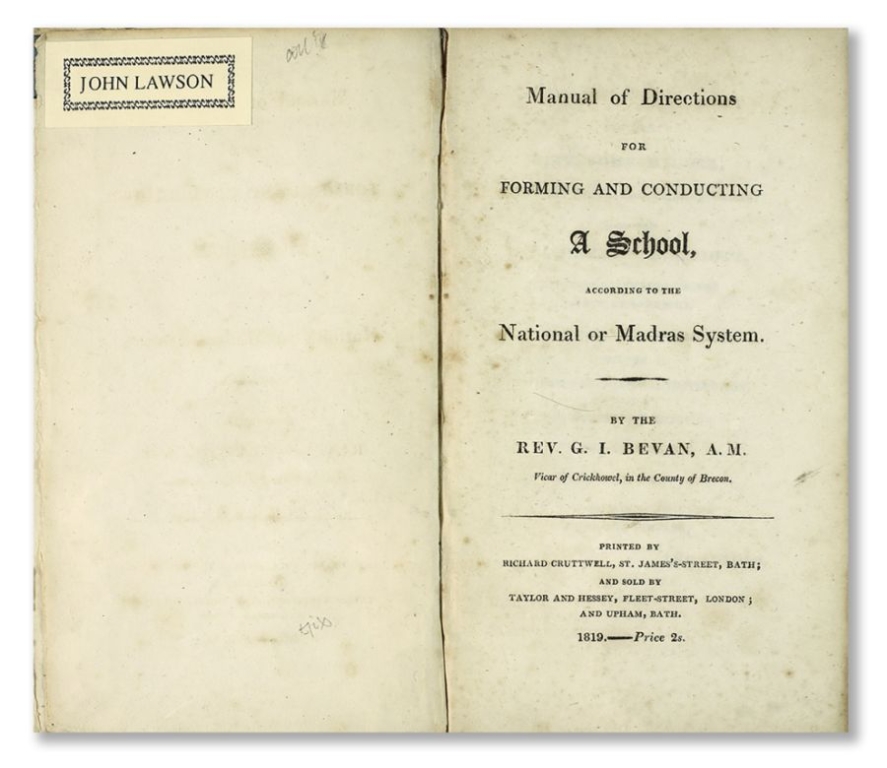
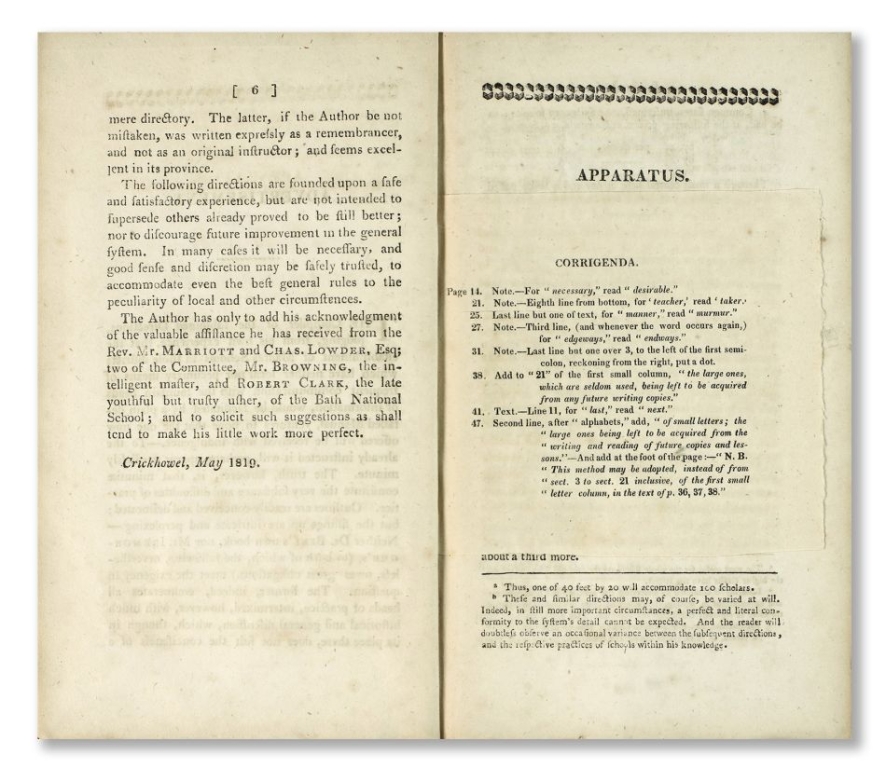
With the new school year having just started it's an opportune time to draw attention to a book purchased recently by the Library. Manual of directions for forming and conducting a school, according to the national or Madras system was published in 1819 and the author was the then Vicar of Crickhowell, The Revd George Jones Bevan. The type of educational system mentioned in the book became popular in the early nineteenth century, taking its inspiration from village schools in south India where the older and abler students were used as assistants to the teacher.
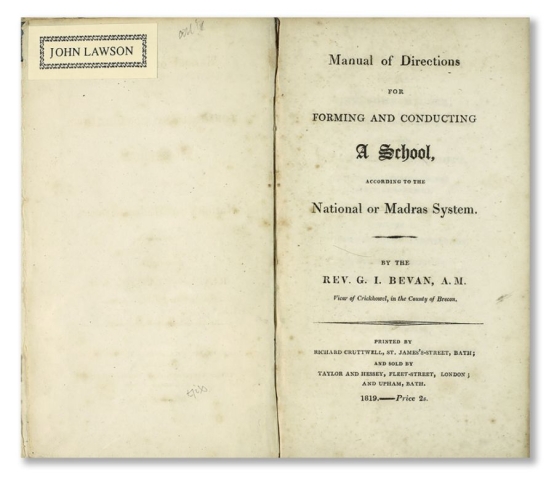
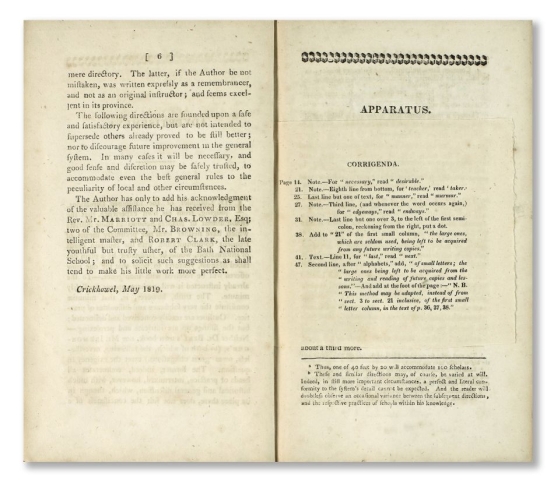
The book is a practical guide to the system, applying the theoretical ideas espoused by its pioneer, Andrew Bell (1753-1832) in his book, The Madras School, which was published in 1808. By giving responsibility to the older and brightest students to be assistants to the teacher, it enabled the school to increase the average class sizes and so making education more accessible for children of primary school age.
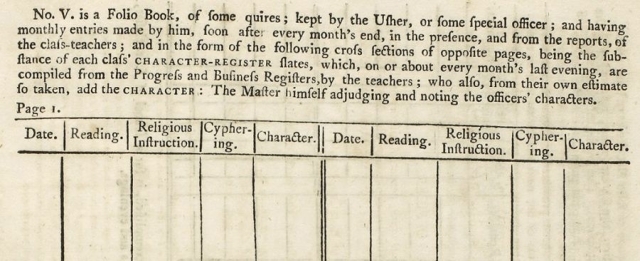
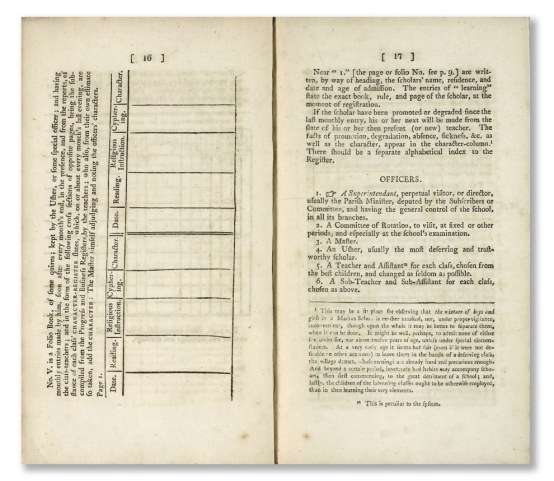
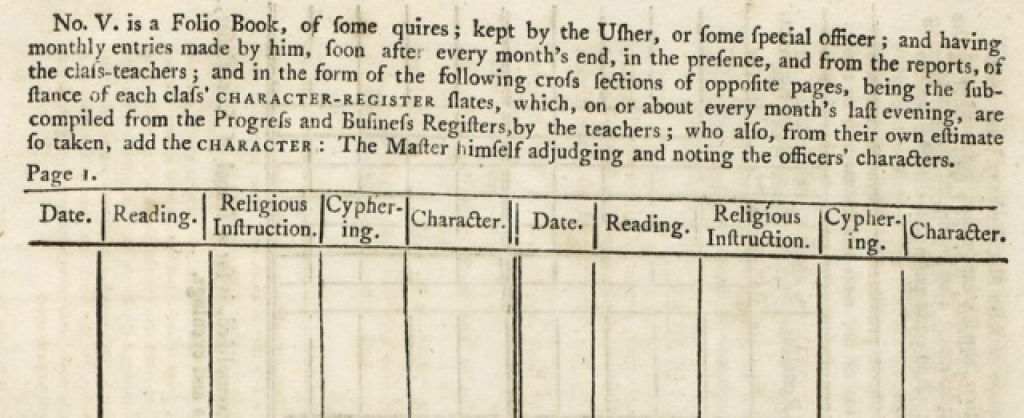
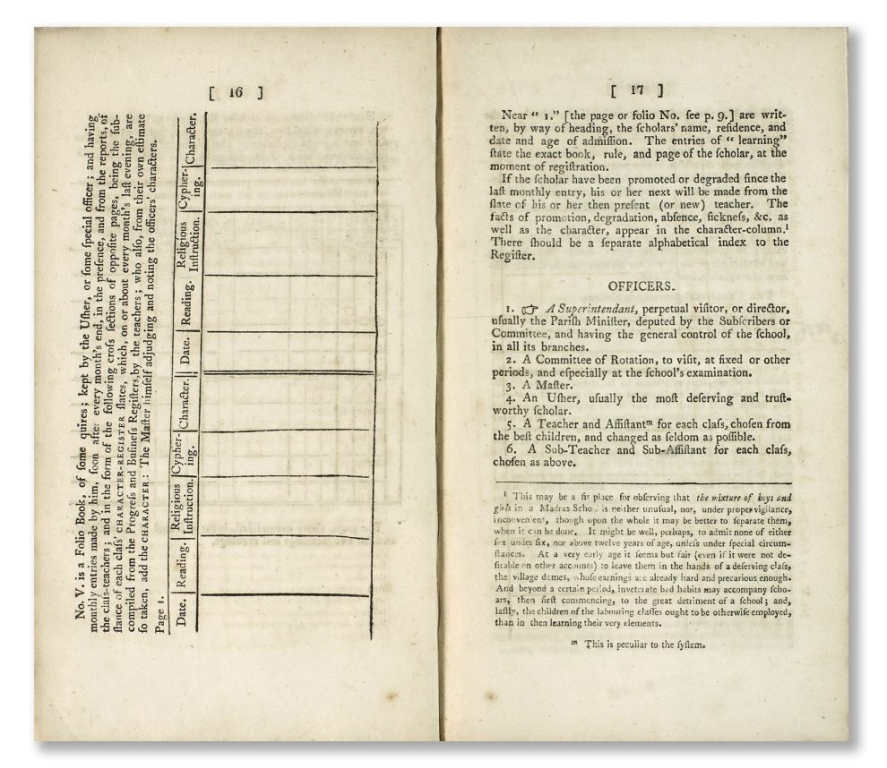
In the book, Bevan concentrates on the practical side of the system, including listing the apparatus required by a school to run the system. Desks, books, slates for writing on, a register (see the template provided) and pencils, pens, and chalk are among the items he lists. He states that officers should be selected from amongst the pupils and that the most deserving and trustworthy should be nominated as an usher. The routine school day is then laid out including a series of punishments and rewards. There are sections on how subjects should be taught including numeracy, literacy, and notation. Detailed instructions are given in each case, clearly designed to enable the pupils to memorise and learn the fundamentals of each subject.


The system aimed to foster diligence, industry, and honesty. Pupils had to master basic steps first (such as single syllable words for reading) before progressing to more complex stages. Prayer and religious education were also deemed an important facet of the system. The school valued Christian ideals in Great Britain, where each pupil was treated with respect and valued as an individual. The ethical lessons of the faith such as humility, grace and care for others were taught and were an important part of the school ethos. These are the guidelines to a complete education.