Griffith John Williams (1892–1963) was a renowned scholar of Welsh literature. The son of a blacksmith and hailing from Cellan, he attended Tregaron Intermediate School before winning a scholarship to University College of Wales Aberystwyth. He went on to expose the forgeries of Iolo Morgannwg, publish extensively on a wide range of literary topics, travelling to the Biblioteca Ambrosiana in Milan to research the Welsh grammarian and Catholic exile Gruffydd Robert, and competing in the Eisteddfodau with his own poetry and prose. His research area covered the Middle Ages to the early nineteenth century. Of particular relevance to us here at the National Library is G .J. Williams’s love for the physical book as well as its content. He was an avid collector, and he generously bequeathed his entire collection to the National Library in his will.
The collection of early monographs begins in 1567 with William Salesbury's New Testament (GJW 1 and 2) in Welsh and comprises 438 books published before 1830. Around a hundred of these date from the 17th century, and many of them are religious in theme. Most of the books have been extensively read and used, and passed down through the family or shared among friends and siblings. Consequently, many of the volumes are filled with marginal notes.
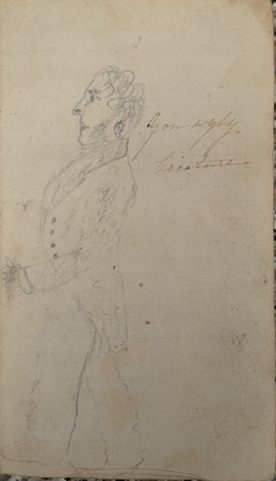
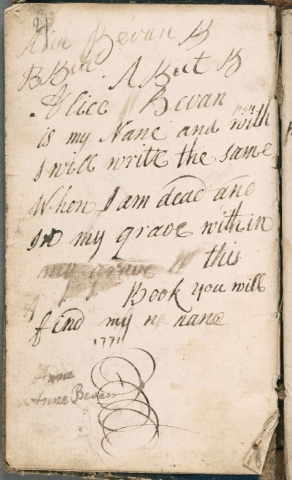
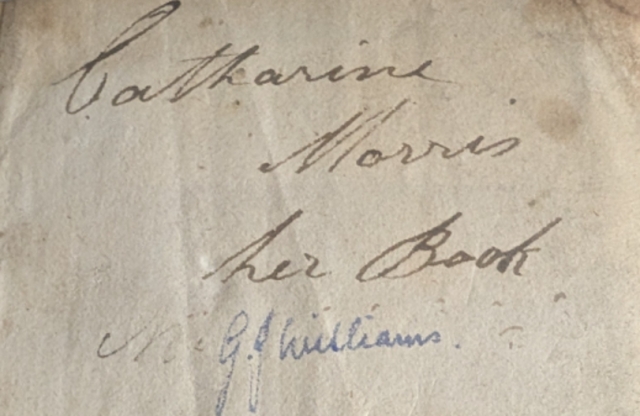
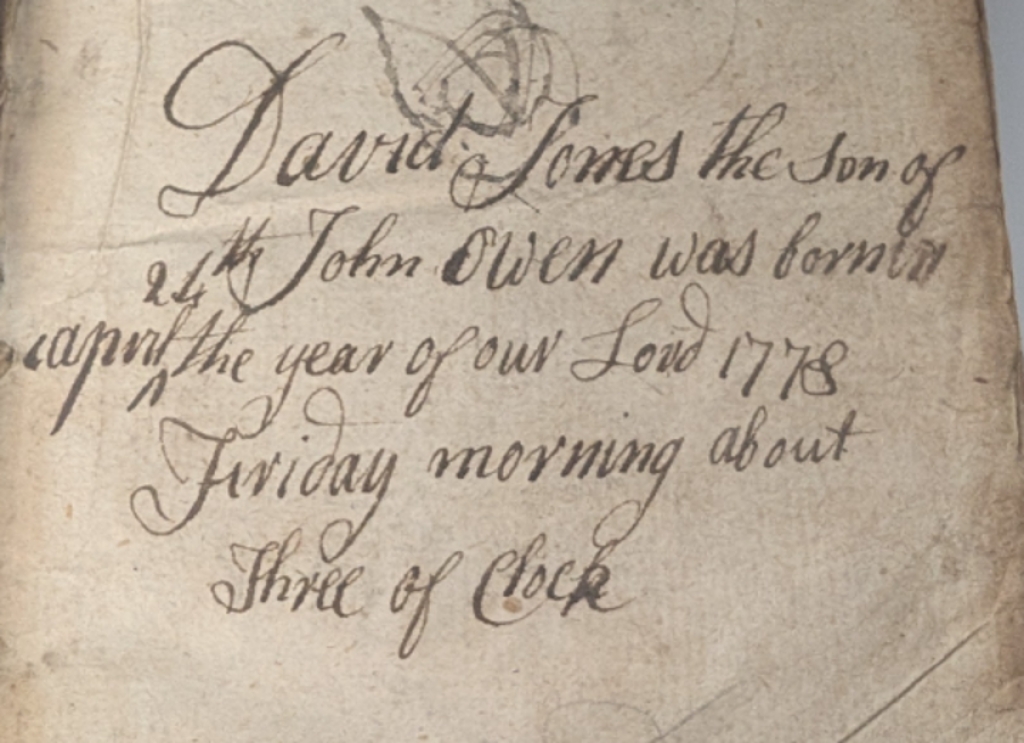
According to Katherine Acheson (2019), marginalia constitutes 'evidence of reading practice...in interaction with key cultural and literary texts and in the context of an intellectual and ideological community'. She summarises the kind of marginalia as follows: ‘ownership, 'pen-trials', doodles, and practice in writing and arithmetic, accounts, family events, births, journeys and illnesses, and marriages (and deaths..) [and] endless dry runs of people learning to write their names'. Certainly, all of these are apparent in GJW’s early books. One thing Acheson doesn't mention is poetry. Many books contain handwritten poems: famous lines written out neatly, such as 'When Thy Beauty Appears' by Thomas Parnell, transcribed word for word in a 1721 edition of Dryden's Fables (GJW 91). Or indeed verses composed by the book's owner, with crossings-out and redrafting. What was also interesting to note was the clear difference in ink, style, and handwriting between the 16th, 17th, and 18th centuries. If the publication date isn’t clear, the marginal notes can act as guide to the correct period.
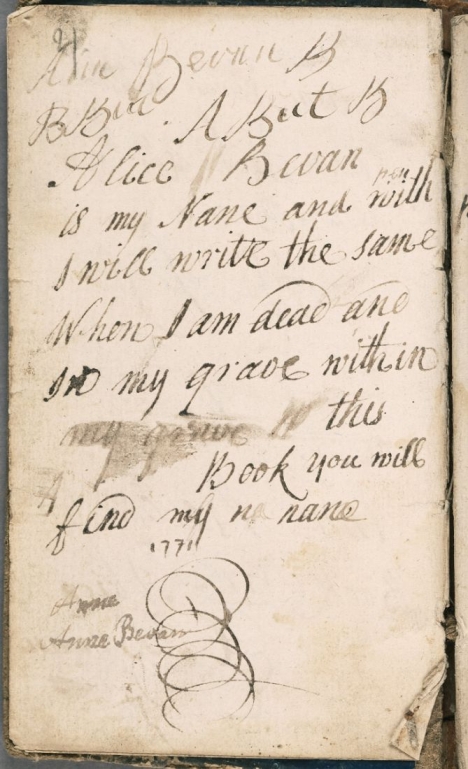
The vast majority of the books belonged to men, but some belonged to women. The earliest is Llwybr hyffordd yn cyfarwyddo yr anghyfarwydd i'r nefoedd published in 1682 (GJW 51), which belonged to a Catherine Morris. There is also a volume of catechisms from 1762 filled with sketches by a woman (or perhaps a young girl) named Anne or Alice Bevan, with a rather morbid, self-composed elegy on the final page.
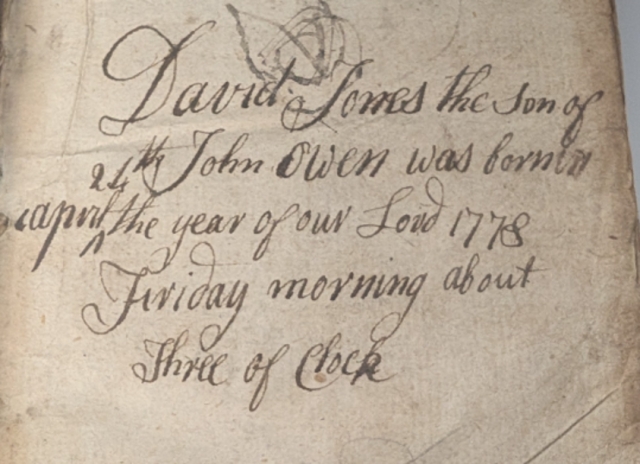
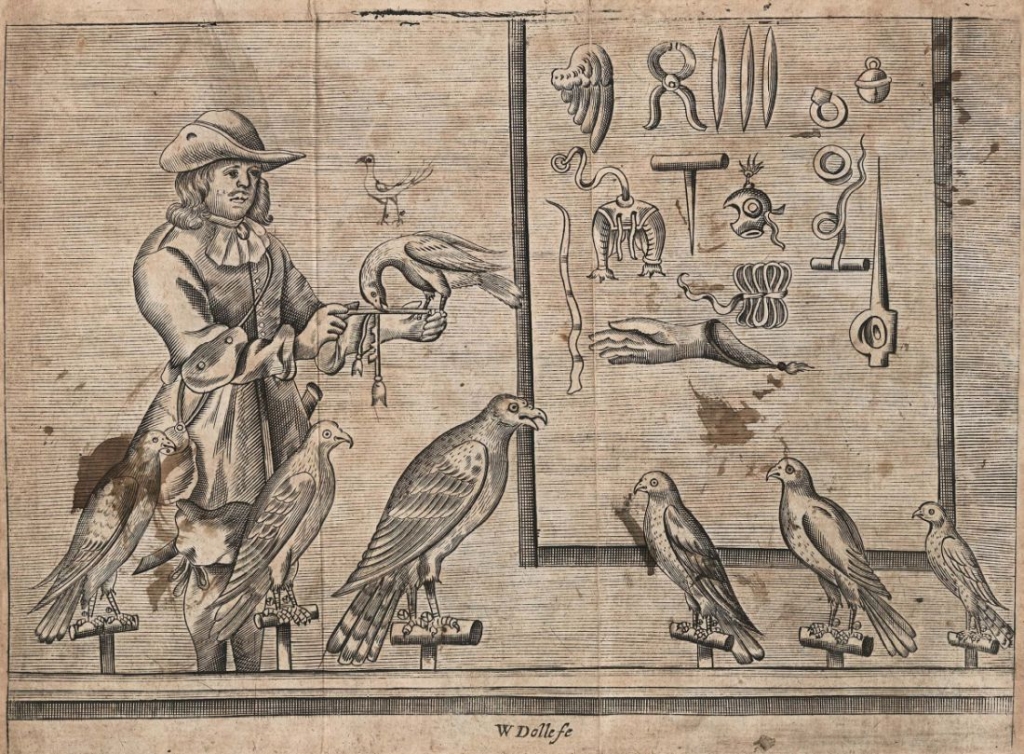
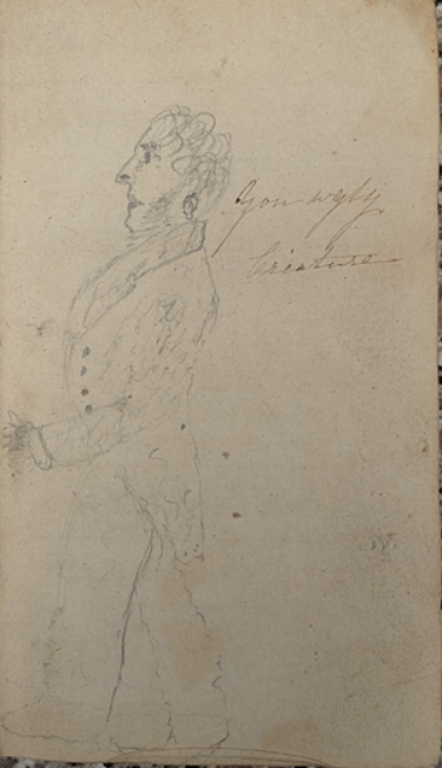

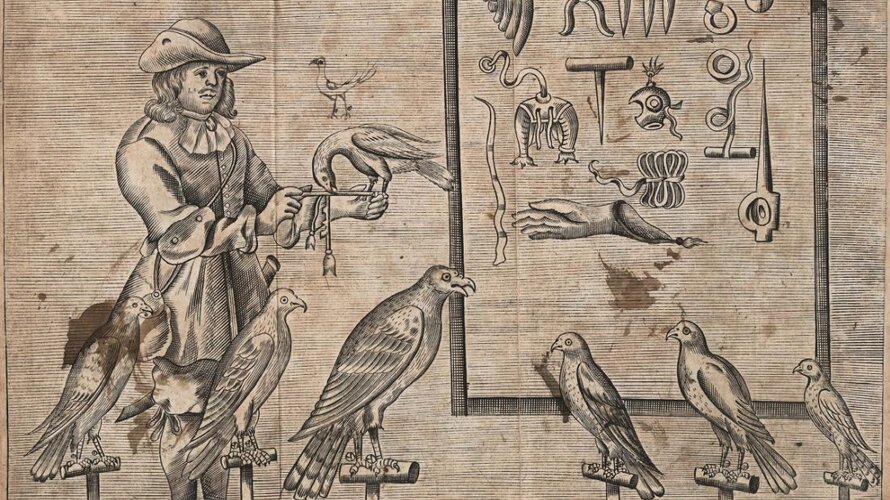
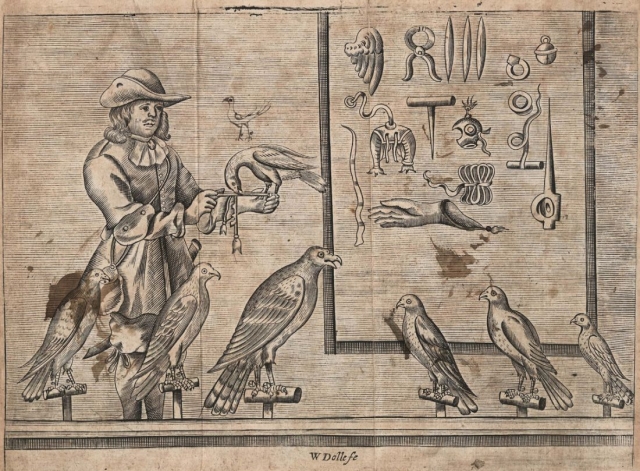
Another notable feature of this collection is the astonishing variety of its contents. It would be too simplistic to assume that early Welsh publications were dominated by religious material (although there was plenty of it). There are many other genres to enjoy: prose, poetry, pleas for mercy against execution (!), elegies, historical accounts, grammars and dictionaries, guides to hunting and fishing, translations from German, Spanish, Latin, and Greek, letters, biographies, family medical books (containing notes made by the owners), and a 17th-century book of baby names (much-used).
Although the collection was numbered, it had not yet been added to the online catalogue, nor was there a simple way to locate the books on the shelf. In recent months, G. J. Williams's collection of valuable Welsh books has been added to the electronic catalogue, and they are now available for readers to order and study in the reading room.
Category: Article