On June 19 a new Welsh-language film, Effi o Blaenau, reaches the big screen across the country, following several extremely successful previews over recent months.
It's a film set deeply in Blaenau Ffestiniog, and tells the story of Effi, a young woman whose story represents the resilience of the community. The film is based on Gary Owen's stage play, Iphigenia in Splott, which itself draws inspiration from Greek tragedy. In this article, we take the opportunity to also think about Effi o Blaenau's Welsh cinematic heritage, from the earliest days of the medium to the 21st century.
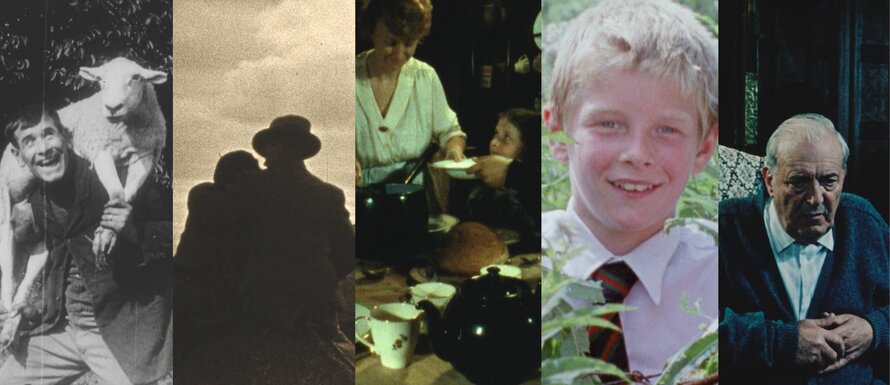
The Sheep Stealer (William Haggar, 1908)
In this film a hopeless man steals a sheep from a field to try to feed his family. The farmer, his dog, a shepherd, and a policeman chase him from the farm all the way back to his house, where they are confronted by his wife and two hungry children. It raises a question of compassion, and community support, at the end of the film, which is also strongly present in Effi o Blaenau too.
Y Chwarelwr (Ifan ab Owen Edwards, 1935)
Y Chwarelwr was the first Welsh language film, created by Sir Ifan ab Owen Edwards, who was inspired after seeing a film in Portuguese. It was filmed in Blaenau Ffestiniog, offering a portrait of the hard life of the industrial community there and the hard work parents put in to support their children's futures. This industrial history is an impressive background for Effi o Blaenau, of course, and the themes of sacrifice and care are central to both films.
Mam (Red Flannel Productions, 1988)
Mam is a portrait-through-film of the essential role of women, especially mothers, in the Welsh psyche. Exploring the idea of the 'Welsh mam' this is a film that undoubtedly emphasizes the sacrifices of mothers in order to maintain the masculine, industrial society around them. Effi o Blaenau offers a fictional view of a similar theme, with a more northern and post-industrial slant of Mam's central focus.
Blue Kenny (Keir Alexander, 2000)
A short film produced as part of Sgrin Cymru's 'Screen Gems' funding scheme at the turn of the 21st century, Blue Kenny tells the story of a young boy who is disruptive at school and faces nothing but anger and spite from most of his teachers. But there is one young teacher, new to her career, who might change his fortune. Effi o Blaenau treads similar ground as it goes on, with the friends, neighbours and family around Effi debating how - if - to support her.
Oed yr Addewid (Emlyn Williams, 2001)
This masterpiece of Welsh-language cinema also tells a story about poverty, failures in state care, addiction, and the importance of reconnection. The film’s central character is William Davies, an elderly man who tries to take advantage of a system stacked against him. The role is filled by the legendary actor, Stewart Jones, and in his footsteps comes Leisa Gwenllian, who has received huge attention and praise for her stellar turn as Effi.
Want to watch the films? You can ask your local cinema to contact us to book them! Alternatively, you can watch all of these films on our Watch and Listen website from in one of NLW’s Clip Corners, in locations across Wales. Two films, Y Chwarelwr and Blue Kenny are also available to watch on the BFI Replay website.
Effi o Blaenau is being screened across the UK from June 19 onwards, with a number of screenings across Wales. You can also visit Film Hub Wales to learn more about their This Is Welsh Film season, which celebrates 130 years of cinema in Wales.
Category: Article