Teacher Toolkit

Background

The story of Tryweryn is very important to the people of Wales, both emotionally and historically. In the 1950s, Liverpool City Council was looking for more water to supply its population and its industries. The Tryweryn Valley near Bala in Gwynedd was chosen as the place to build a large reservoir. In the valley was a small village called Capel Celyn, a farming community where almost everyone spoke Welsh. 

In 1957, Liverpool introduced a special act in the UK Parliament to allow the flooding of the valley. This meant that permission from authorities in Wales was not required. Many people opposed the plan, including the village’s residents, local councils, and Welsh Members of Parliament. However, the act was passed, and only one Welsh MP voted in favour of it. For many people, this showed that Wales had very little political voice at that time. 

The people of Capel Celyn fought hard to save their village. Protests and petitions were organised, and some travelled to Liverpool and London to argue their case. The campaign gained support from people across Wales, raising concerns about the Welsh language and the rights of the Welsh people. But in the end, the plan could not be stopped. Construction of the reservoir began in 1960. Houses and buildings were demolished, and families had to leave their homes. When the dam was completed in 1965, the valley was flooded and Capel Celyn disappeared beneath the lake, which was named Llyn Celyn. Only the village cemetery was moved to higher ground before the flooding. 

Tryweryn had a major impact on Welsh politics and culture. It strengthened support for Welsh nationalism and for protecting the Welsh language, and it was part of the movement calling for greater self-government for Wales. The words “Cofiwch Dryweryn” (“Remember Tryweryn”) became a famous slogan. Today, Llyn Celyn reminds people of this history and of the impact that losing a small village had on Welsh identity.

People's Collection Wales

Possible questions to discuss

  • What do you think life was like in Capel Celyn before the flooding?
  • How do you imagine the villagers felt when they first heard their home might be destroyed?
  • If your own home or school were threatened, what emotions would you feel?
  • Do you think it was fair that the decision to flood the village was made in London, not Wales? Why or why not?
  • Who should have the right to decide what happens to a community’s land?
  • What does this story teach us about power—who has it, and who doesn’t?
  • Why was Capel Celyn important as a Welsh-speaking community?
  • How might losing a village like this affect Welsh language and culture more widely?
  • Do you think a community’s language should be considered when decisions about land are made?
  • Why do you think “Cofiwch Dryweryn” became such an important phrase in Wales?
  • How do stories like Tryweryn shape our sense of Welsh identity today?
  • Should events like this be remembered? If so, how?
  • If you could speak to someone who lived in Capel Celyn before it was flooded, what would you ask them?
  • Imagine you had to leave your home forever—what is the one thing you would take, and why?
  • How might children your age in Capel Celyn have felt as they watched the water rising?
  • Why do you think Liverpool needed the reservoir, and could there have been another solution?
  • Should one community sacrifice something for the benefit of another? When is that acceptable or not?
  • How do we balance human needs (like water) with protecting communities and culture?

Activities and experiences

  • Mapping the Lost Village
  • “Cofiwch Dryweryn” Wall of Memory
  • “Voices of Capel Celyn” Drama Circle
  • Debate: “Was it Right to Flood the Valley?”
  • Creative Writing: A Letter from the Last Night
  • Art Activity: The Rising Waters
  • Field Trip or Virtual Tour
  • Build a Mini-Museum of Capel Celyn
  • Language & Identity Workshop

Key concepts

(derived from the statements of what matters)

Humanities
  • Investigate
  • Interpretation
  • Change and continuity
  • Places
  • Human impact on the world
  • Justice, inequality and rights
  • Social action
  • Ethical and moral questions
The Expressive Arts
  • Understand context in creative works
  • Convey ideas
  • Exploring purpose and meaning
  • Develop and refine designs
Health and Wellbeing
  • Social influences and norms
  • Identity and values
  • Rights and respect
  • Types of relationships
Languages, Literacy and Communication
  • Listen with empathy
  • Reading strategies
  • Draw a conclusion
  • Vocabulary Development
  • Communicate effectively and communicate ideas and opinions
  • Cooperation and discussion
  • Writing for different purposes and audiences

1867

London County Council proposes providing London with 393 million gallons of water each day. The scheme, labelled by the press as “the Monster Reservoir,” includes the construction of several new reservoirs, among them a dam in the Dee Valley that would lead to the flooding of Bala and the surrounding area.

1881-1889

Liverpool Corporation floods Cwm Llanwddyn to create Lake Vyrnwy, which at the time of its completion becomes the largest artificial lake in Europe. The dam wall stands 100 feet high and extends 400 yards in width, and the reservoir is located 68 miles from Liverpool.


1902

The Liverpool Corporation Act is passed in Parliament.


1955

March

A covert delegation travels to Cwm Tryweryn in Meirionnydd to carry out confidential surveys on behalf of Liverpool Water Corporation.


20 December

At an evening meeting, Liverpool Corporation resolves to put forward the Tryweryn scheme.


22 December

The Liverpool Daily Post runs the headline “Big new dam near Bala planned,” reporting that a parliamentary bill would grant Liverpool Corporation the legal power to dam the Tryweryn River and its valley.

1956

6 January

The residents of Cwm Tryweryn hold their first meeting to consider Liverpool Corporation’s proposal to flood the valley.


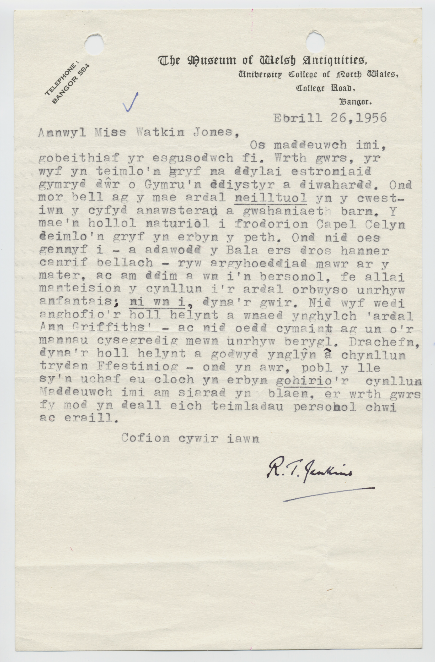
People's Collection Wales: Letter from R. T. Jenkins to E. M. Watkin Jones, Secretary of the Capel Celyn Defence Committee, 26 April 1956

Source: Meirionnydd Archives, Gwynedd Archives Service


September

Gwynfor Evans releases a pamphlet titled Save Cwm Tryweryn for Wales.


Gwynfor Evans, 'Save Cwm Tryweryn for Wales' (Plaid Cymru, 1956) [front cover, image 1 of 27]

People's Collection Wales: Gwynfor Evans, 'Save Cwm Tryweryn for Wales'

Copyright: The Welsh Library, University of Wales Bangor Information Services 2004


21 November

All but five members of the Cwm Tryweryn community march through Liverpool’s streets carrying banners to protest the plan. The council approves the measure to flood Cwm Tryweryn by a vote of 95 to 1.


1 December

The Tryweryn Defence Committee is established in Liverpool.


18 December

Liverpool City Council votes 160 to 90 in favour of the proposal to flood Cwm Tryweryn.

1957

31 July

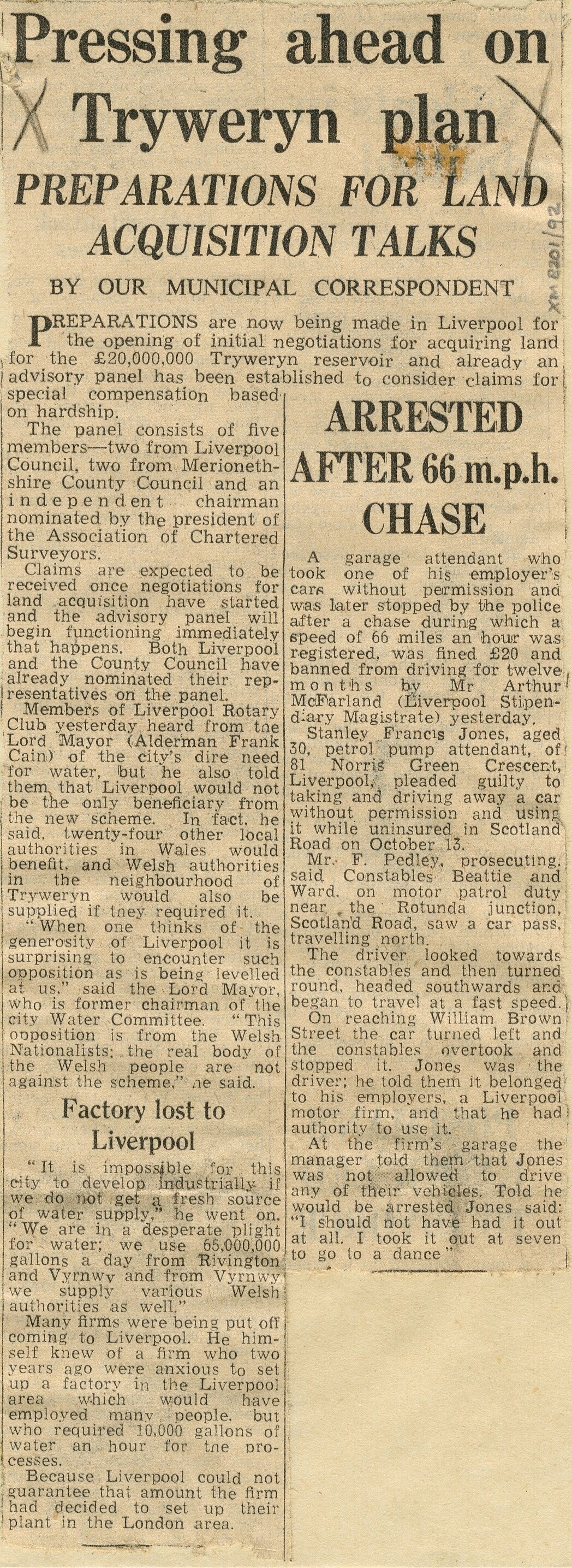
Liverpool Corporation’s Tryweryn Reservoir Bill is passed by Parliament with a majority of ninety-six. The following day, after being returned to the House of Lords, the Bill receives Royal Assent and becomes law.


Copyright: Gwynedd Archives 2011

People's Collection Wales: Pressing Ahead on Tryweryn Plan, 1957


25 October

A national conference, organised by Alderman John Hinds Morgan, the Lord Mayor of Cardiff, is held to debate a motion submitted by Gwynfor Evans. Among the four options agreed at the conference, Evans’ proposal accepts the flooding of Tryweryn but emphasises the protection of the village of Capel Celyn.


1958

21 January

At a Liverpool Corporation committee meeting, all four alternative proposals presented at the Cardiff conference are rejected.


29 April

Preliminary work to prepare Cwm Tryweryn for flooding begins with the sinking of boreholes and trial pits in the valley.


June

The final HMI report on Ysgol Capel Celyn is released.


1960

2 August

Work starts to ready Cwm Tryweryn for flooding as the construction site becomes active.


1961

Autumn

Two students, Emyr Llywelyn Jones and Aled Gwyn, approach Saunders Lewis to gauge his opinion on carrying out a peaceful protest at the Tryweryn site. Following this, several students resolve “to do something at Tryweryn.” Saunders advises Jones and Gwyn to return to college, remarking that it would be a shame to waste their “young lives” on the issue.


1963

10 February

After adopting the name Mudiad Amddiffyn Cymru (MAC – The Movement to Defend Wales), Emyr Llywelyn Jones, Owain Williams, and John Albert Jones carry out militant actions at the Tryweryn reservoir construction site.


18 February

Emyr Llywelyn Jones is taken into custody at his lodgings in Aberystwyth.


April

Owain Williams and John Albert Jones are arrested for their involvement in the Tryweryn and Gellilydan protests.


2 May

The logbook of Ysgol Capel Celyn notes the decision to close the school at the end of the term.


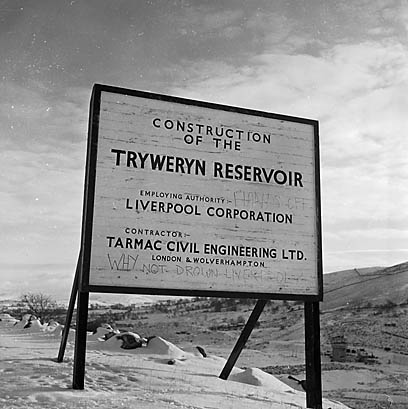
People's Collection Wales: Sign reminding the residents of Capel Celyn of the fate of their village, 14 November 1963

1964

June

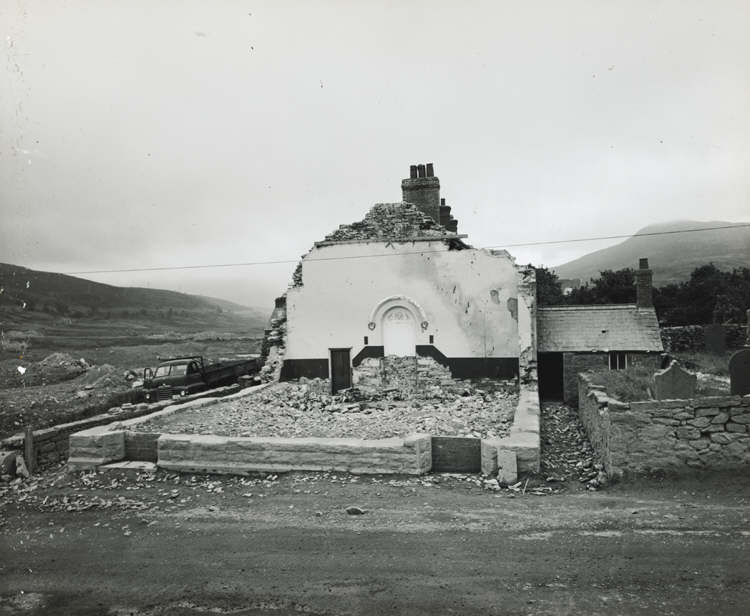
The chapel in Capel Celyn is torn down.


People's Collection Wales: Capel Celyn Chapel dismantled, 29 July 1964

Copyright: Liverpool Corporation 2001


Amgueddfa Cymru: Pamphlet commemorating the opening of the Capel Celyn Memorial

Source: Amgueddfa Cymru


1 September

Water from the surrounding streams is released into the Tryweryn reservoir for the first time.

1965

August

Exactly five years after construction began, the Llyn Celyn reservoir reaches full capacity.


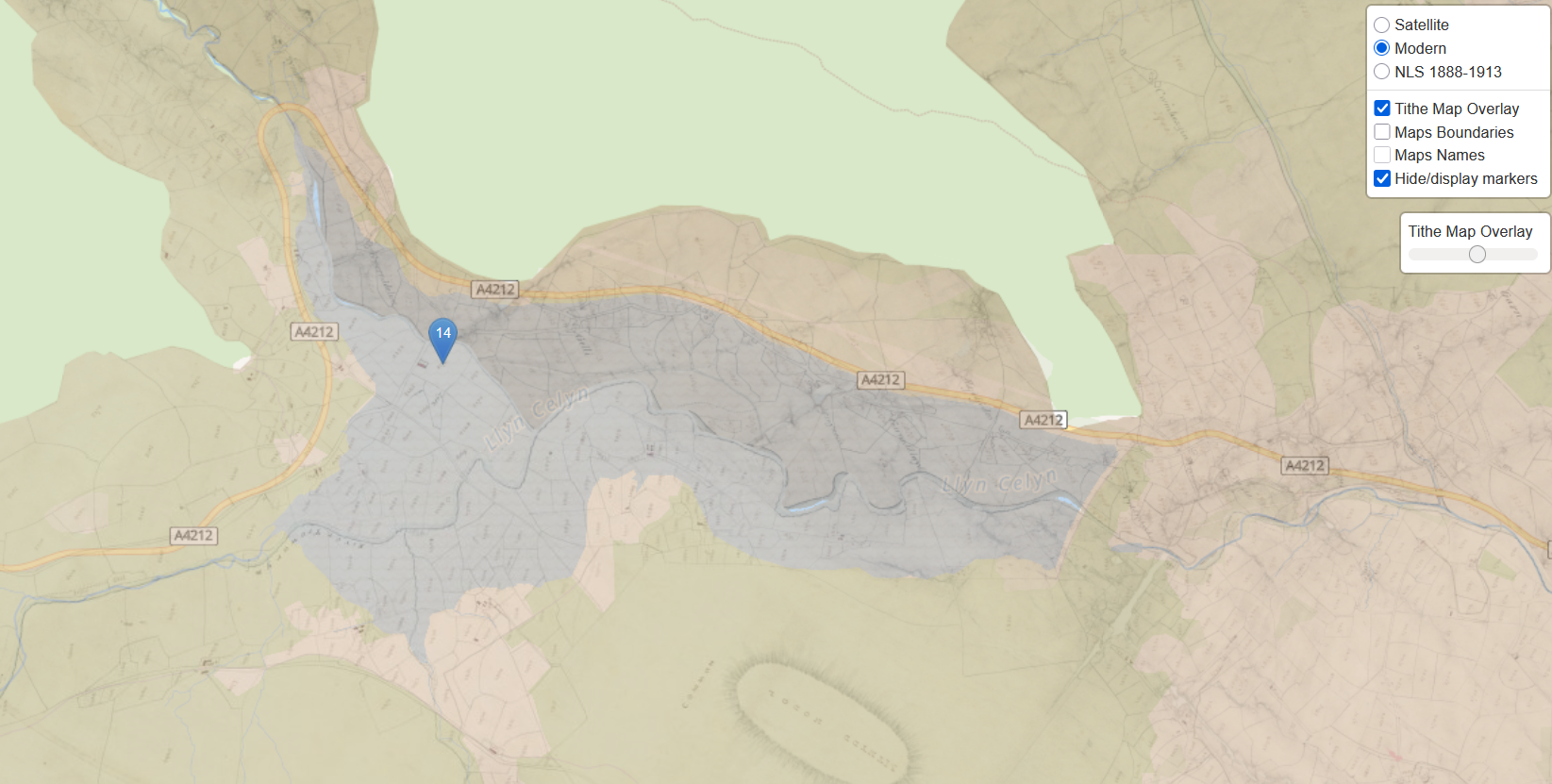
Tithe Maps of Wales: Llyn Celyn


21 October

Llyn Celyn is formally inaugurated.


1969

2 November

After a two-year militant campaign, John Barnard Jenkins and Frederick Ernest Alders are arrested at their homes in Wrexham and Rhosllanerchrugog, respectively.


1974

1 April

One of the new water boards established by the Water Act is Welsh Water, which assumes control of Llyn Celyn.


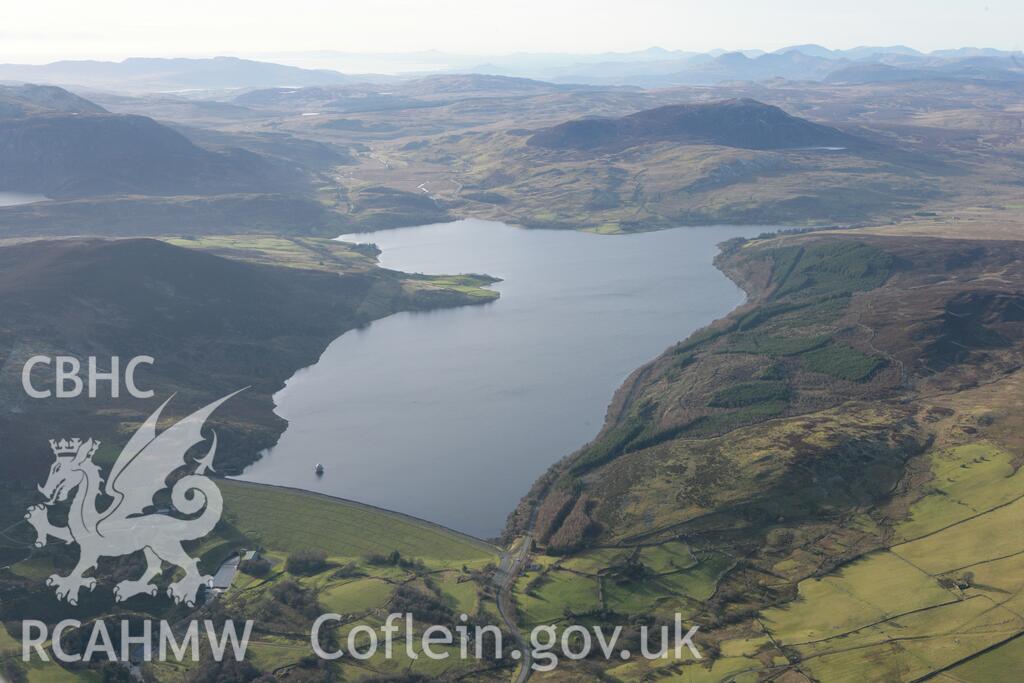
The Royal Commission on the Ancient and Historical Monuments of Wales: Coflein. Llyn Celyn

Source: Coflein, RCAHMW

1997

19 September

Wales votes in favour of establishing a National Welsh Assembly and a degree of devolved self-government by a majority of 6,721. The Assembly gains authority over most, though not all, aspects of water resources in Wales.


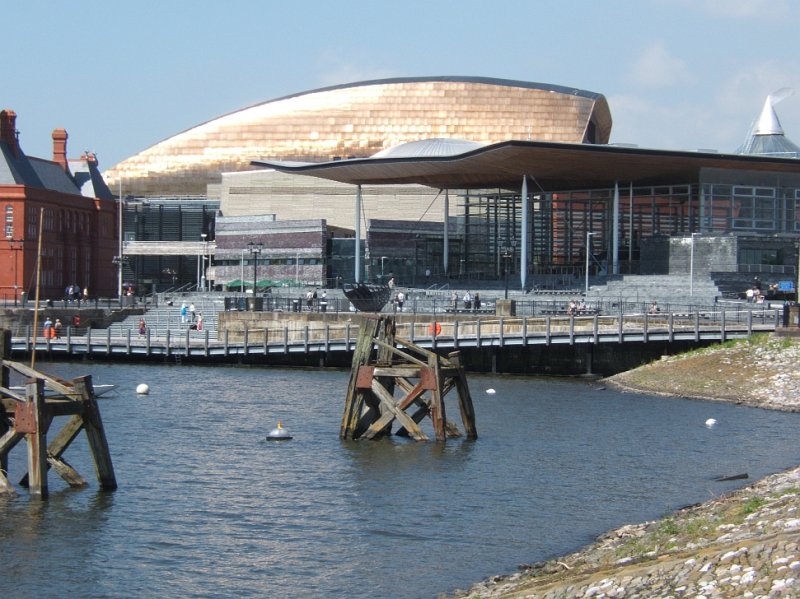
People's Collection Wales: Welsh Assembly building from across water to the south

Source: RCAHMW


People's Collection Wales